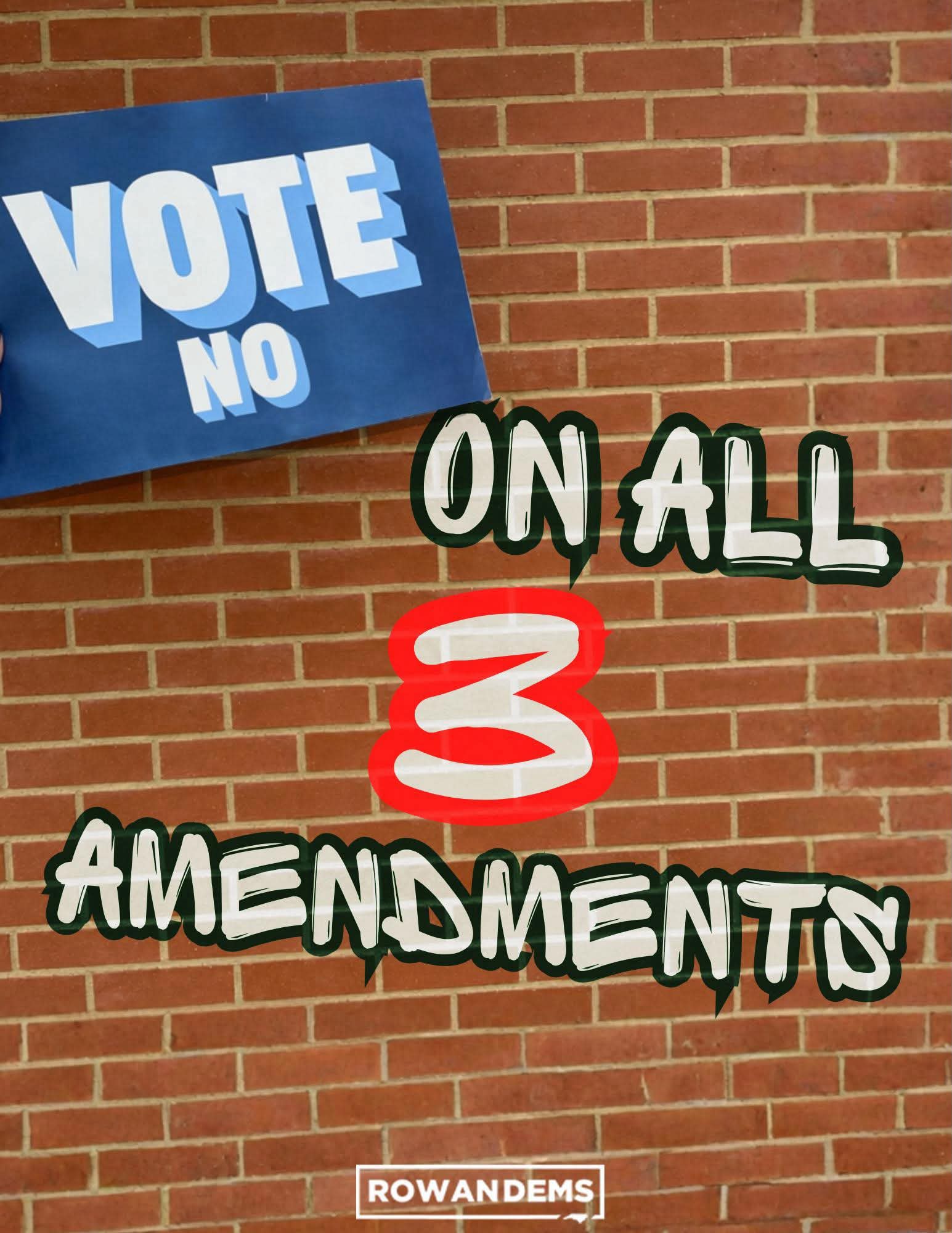
RCDP continues to provide education about the proposed amendments. You may have heard Shawn Rush’s address in East Spencer with research background compiled by volunteer Erin FitzPatrick. Or you may have attended the very informative meeting at the Sept. Breakfast with a non-partisan speaker from the NC Budget and Tax Center. The League of Women Voters of NC provide more comprehensive information and have announced that they oppose all three.
Access this link for all provided resources from League of Women Voters of NC – https://my.lwv.org/north-carolina-state/action-alert/three-constitutional-amendments-north-carolinas-2026-ballot
From the website:
North Carolina voters will decide three proposed amendments to the State Constitution in the November 3, 2026 general election. Why the League Opposes the Amendments
The amendments address:
- State income taxes: lowering the maximum income-tax rate permitted by the NC Constitution from 7% to 3.5%.
- Local property taxes: requiring the General Assembly to enact laws limiting increases in property-tax levies by local governments. The amendment does not establish the limits or formula; those would be determined through subsequent legislation, which may include exceptions.
- Photo ID for voting: expanding the Constitution’s existing photo ID requirement from in-person voting to all methods of voting. State law already requires photo identificaiton or an exception process for absentee-by-mail voting; the amendent would place the broader requirement in the Constitution.
Understand Each Amendment
Before voting, learn what each amendment would—and would not—do.
The League of Women Voters of North Carolina’s voter education materials provide concise, position-neutral overviews of each proposal, including key facts, arguments made by supporters and opponents, and quesitons voters may wish to consider. (See resources below.)