For decades, economic development has frequently been treated as the first priority, while people and environmental stewardship have been secondary considerations. I believe that equation must change. Economic growth matters, but communities cannot thrive if their natural systems, quality of life, and future generations are treated as afterthoughts.
In an era when public decisions often feel rushed, reactive or politically choreographed, I believe Rowan County needs a different kind of leadership.
Not leadership driven by ideology or predetermined conclusions, but leadership grounded in reality, evidence and careful thought. Leadership that sees the world not as someone wishes it to be, but as it actually is.
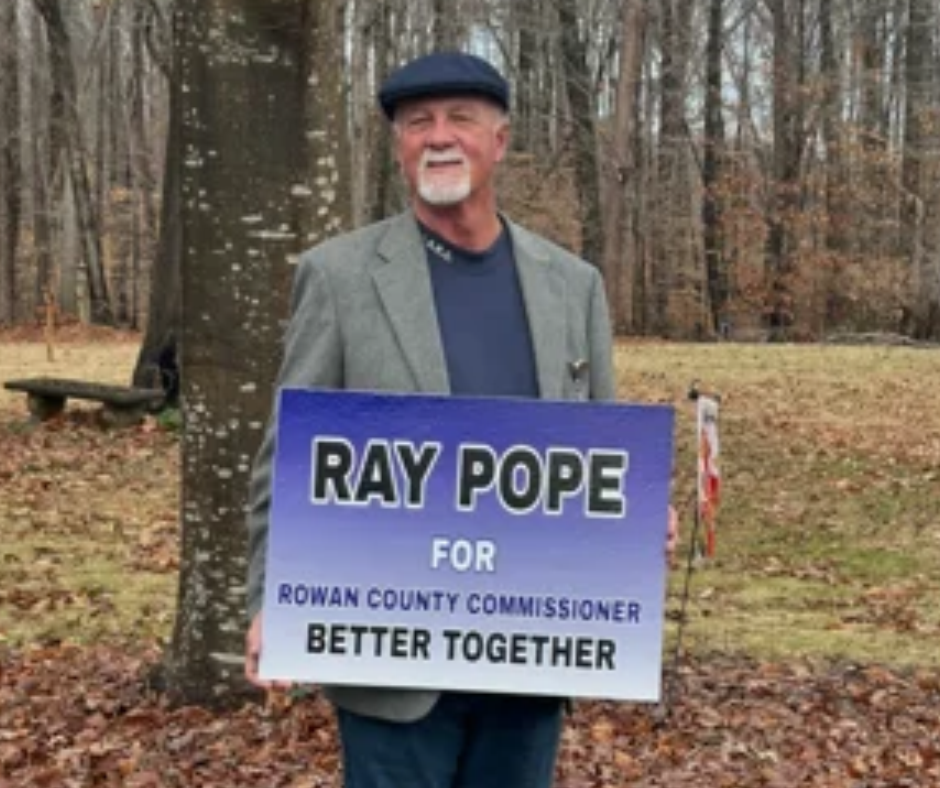
As a candidate for Rowan County commissioner, I offer a perspective shaped by 37 years in education. During that time, I taught science at multiple levels, served in leadership roles and spent a career helping students understand complex systems and make sense of complicated problems. Retirement did not end those habits. If anything, it strengthened them.
The same approach that worked in the classroom can work in government.
I call it the 3-4-5 Thinking Framework. Three questions. Four lenses. Five consequences.
It is not a slogan. It is a disciplined way of evaluating public policy, economic development proposals, infrastructure investments, environmental concerns and community priorities.
Too often, government is pressured to respond quickly. But speed is not the same thing as wisdom. “If you don’t slow down and think clearly with well-defined priorities, you’re not really deciding. You’re reacting.”
For decades, economic development has frequently been treated as the first priority, while people and environmental stewardship have been secondary considerations. I believe that equation must change. Economic growth matters, but communities cannot thrive if their natural systems, quality of life, and future generations are treated as afterthoughts.
My approach is guided by several principles developed through years of teaching science and studying how living systems function.
First, structure leads to clarity. Public decisions improve when citizens can see how those decisions are made. Transparency creates accountability, and accountability creates trust.
Second, data should outweigh opinion. Personal beliefs matter, but facts must come first. Sound decisions require evidence, careful analysis, and a willingness to follow where the information leads.
Third, creativity strengthens problem-solving. Whether designing a stained-glass project, developing a lesson plan, or evaluating a major development proposal, solutions improve when we examine issues from multiple perspectives.
Fourth, patience is not weakness. In today’s fast-moving political environment, taking time to think carefully is often viewed as a flaw. I see it as a responsibility.
As I often tell my students and now remind myself: “If you don’t take time to think, you’re borrowing trouble from the future.”
Finally, humor keeps people human. Differences of opinion are inevitable, but respect and civility should never be optional. Good government requires collaboration, and collaboration begins with recognizing our shared humanity.
Many of these beliefs are rooted in a broader understanding of how systems work. Throughout my career, I taught that adaptability helps living things survive. Small changes can create large consequences. Quick fixes often create bigger problems later.
Sustainable solutions solve more than one problem at a time. Nature itself thrives through interconnected communities.
Perhaps most importantly, we are all responsible. Everything we do, and everything we choose not to do, makes a difference.
Running for county commissioner has been an education in itself. I have met new people, formed new friendships, learned new skills and discovered another way to serve my community.
Along the way, I have also turned the microscope on myself. Campaigning forces a person to examine not only what they believe but why they believe it. That process has reaffirmed values that were instilled long ago by family, education and experience: service, fairness, curiosity, responsibility and respect for the world we share.
We all live on the same small and remarkable planet. We share the same communities, roads, water, air and future. Our leaders should reflect that reality by listening carefully, thinking deeply and acting responsibly.
That is the kind of leadership I hope to bring to Rowan County.